
Robert Falcon Scott
British naval officer and Antarctic explorer who reached the South Pole.

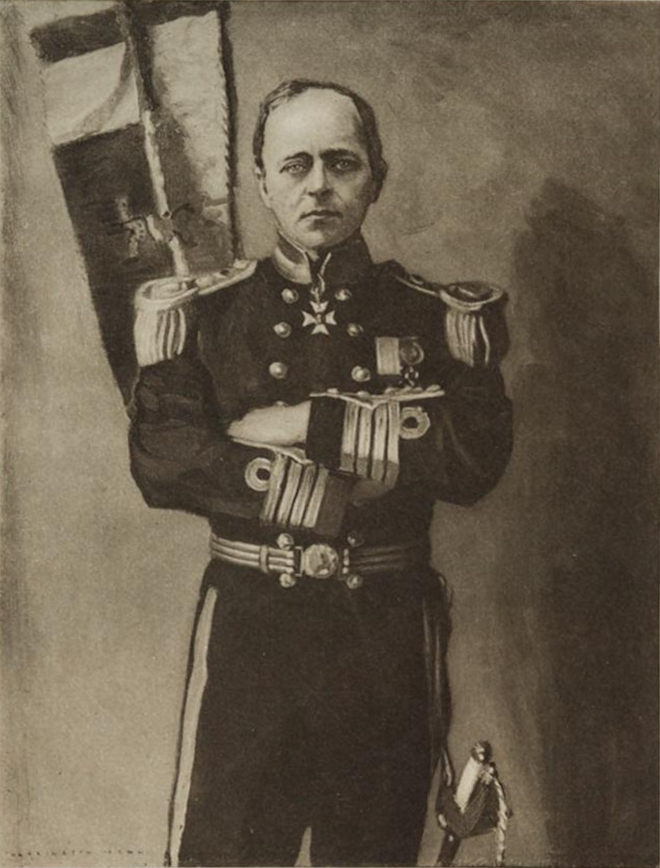
Steffano Francis Webb · Public domain
Robert Falcon Scott (6 June 1868 – c. 29 March 1912) was a British naval officer and explorer who led two expeditions to the Antarctic regions: the Discovery Expedition of 1901–1904 and the Terra Nova Expedition of 1910–1913. On the first expedition, he set a new southern record by marching to latitude 82°S and discovered the Antarctic Plateau, on which the South Pole is located. On the second venture, he led a party of five which reached the South Pole on 17 January 1912, less than five weeks after Amundsen's South Pole expedition. On the return journey from the Pole, a planned meeting with supporting dog teams from the base camp failed, despite Scott's written instructions, and at a distance of 162 miles (261 km) from their base camp at Hut Point and approximately 12.5 miles (20.1 km) from the next depot, Scott and his companions died.
- born
- 6 June 1868
- died
- c. 29 March 1912
- field
- Naval officer and polar explorer
- nationality
- British
- known_for
- Leading the Discovery and Terra Nova expeditions to Antarctica; reaching the Sou
Verified Timeline
Lore & Background
Scott was born on 6 June 1868, the third of six children, to John Edward, a brewer and magistrate, and Hannah (née Cuming) Scott of Stoke Damerel, near Devonport. He began his naval career in 1881 as a 13-year-old cadet after passing exams for HMS Britannia. In July 1883, he passed out as a midshipman, seventh overall in a class of 26. While stationed in St Kitts on HMS Rover, on 1 March 1887, Midshipman Scott's cutter won a morning race across the bay, watched by Clements Markham, then Secretary of the Royal Geographical Society, who noted his intelligence, enthusiasm and charm. Scott passed his examinations for sub-lieutenant in March 1888 with four first class certificates out of five, and was promoted to lieutenant in 1889. He graduated from the torpedo training course on HMS Vernon with first class certificates in both theory and practical examinations. In the summer of 1893, while commanding a torpedo boat, Scott ran it aground, earning a mild rebuke. In 1894, he learned his father had lost all his capital and was virtually bankrupt. In June 1899, a chance encounter with Sir Clements Markham, now President of the Royal Geographical Society, led him to volunteer to lead the Discovery Expedition.
Reader's Guide
Scott's significance lies in his two Antarctic expeditions, which advanced geographical knowledge and scientific discovery. On the Discovery Expedition, he set a new southern record by marching to latitude 82°S and discovered the Antarctic Plateau. On the Terra Nova Expedition, he led a party of five which reached the South Pole on 17 January 1912, less than five weeks after Amundsen's South Pole expedition. On the return journey, a planned meeting with supporting dog teams from the base camp failed, despite Scott's written instructions, and at a distance of 162 miles (261 km) from Hut Point and approximately 12.5 miles (20.1 km) from the next depot, Scott and his companions died. When their bodies were discovered, they had in their possession the first Antarctic fossils discovered, from the Glossopteris tree, proving Antarctica was once forested and joined to other continents. Following the news of his death, Scott became a celebrated hero, with memorials erected across the UK. In the last decades of the 20th century, questions were raised about his competence and character, but 21st-century commentators have regarded Scott more positively after assessing the temperature drop below −40 °C (−40 °F) in March 1912, and after re-discovering Scott's written orders of October 1911, in which he had instructed the dog teams to meet and assist him on the return trip.
Did You Know?
- Scott set a new southern record on the Discovery Expedition by marching to latitude 82°S.
- Scott's party reached the South Pole on 17 January 1912, less than five weeks after Amundsen's expedition.
- When Scott's body was discovered, he had in his possession the first Antarctic fossils, from the Glossopteris tree, proving Antarctica was once forested and joined to other continents.
- Scott's written orders of October 1911 instructed dog teams to meet and assist him on the return trip, but the meeting failed.
Naval Formation and the Path to the South
Born on 6 June 1868, the third of six children, Scott was the elder son of John Edward, a brewer and magistrate, and Hannah Scott of Stoke Damerel, near Devonport. There were naval and military traditions in the family—Scott's grandfather and four uncles all served in the army or navy. Following family tradition, Scott and his younger brother Archie were predestined for careers in the armed services. Scott spent four years at a local day school before being sent to Stubbington House School in Hampshire, a cramming establishment that prepared candidates for the entrance examinations to the naval training ship HMS Britannia at Dartmouth. Having passed these exams, Scott began his naval career in 1881 as a 13-year-old cadet. In July 1883, he passed out of Britannia as a midshipman, seventh overall in a class of 26. By October, he was en route to South Africa to join HMS Boadicea. While stationed in St Kitts, West Indies, on HMS Rover, on 1 March 1887, Midshipman Scott's cutter won that morning's race across the bay, observed by Clements Markham, then Secretary of the Royal Geographical Society. Markham, who habitually collected likely young naval officers for future polar exploration, was impressed by Scott's intelligence, enthusiasm and charm. In March 1888 Scott passed his examinations for sub-lieutenant with four first class certificates out of five, and was promoted to lieutenant in 1889. In 1891, he applied for the two-year torpedo training course on HMS Vernon, graduating with first class certificates in both theory and practical examinations. A small blot occurred in the summer of 1893 when, while commanding a torpedo boat, Scott ran it aground, earning a mild rebuke.
Two Expeditions, One Record
Scott's name became inseparably associated with the Antarctic after he volunteered to lead the Discovery Expedition of 1901–1904, following a chance encounter in June 1899 with Sir Clements Markham, President of the Royal Geographical Society. On that first expedition, Scott set a new southern record by marching to latitude 82°S and discovered the Antarctic Plateau, on which the South Pole is located. On the second venture, the Terra Nova Expedition of 1910–1913, Scott led a party of five which reached the South Pole on 17 January 1912, less than five weeks after Amundsen's South Pole expedition. The expedition had both scientific and exploration objectives; the latter included a long journey south, in the direction of the South Pole. This march, undertaken by Scott, Ernest Shackleton and Edward Wilson, took them to a latitude of 82°17′S, about 530 miles (850 km) from the pole. A harrowing return journey brought about Shackleton's physical collapse and his early departure from the expedition. The second year showed improvements in technique and achievement, culminating in Scott's western journey which led to the discovery of the Polar Plateau. Scott remained committed to Antarctic work during the final years of his life.
The Fatal Return and an Unintended Legacy
The tragedy that defined Scott's final days unfolded on the return journey from the South Pole. A planned meeting with supporting dog teams from the base camp at Hut Point failed, despite Scott's written instructions. At a distance of 162 miles (261 km) from their base camp at Hut Point and approximately 12.5 miles (20.1 km) from the next depot, Scott and his companions died. When Scott and his party's bodies were discovered, they had in their possession the first Antarctic fossils discovered. The fossils were determined to be from the Glossopteris tree and proved that Antarctica was once forested and joined to other continents. The expedition also experienced problems with scurvy, which affected Scott's domestic reputation. During an early attempt at ice travel, a blizzard trapped expedition members in their tent and their decision to leave it resulted in the death of George Vince, who slipped over a precipice on 11 March 1902. Dogs were taken, as were skis, but the dogs succumbed to disease in the first season. Nevertheless, the dogs' performance impressed Scott, and despite moral qualms, he implemented the principle of slaughtering dogs for dog food to increase the others' range.
Hero, Controversy, and Reassessment
Following the news of his death, Scott became a celebrated hero, a status reflected by memorials erected across the UK. However, in the last decades of the 20th century, questions were raised about his competence and character. Commentators in the 21st century have regarded Scott more positively after assessing the temperature drop below −40 °C (−40 °F) in March 1912, and after re-discovering Scott's written orders of October 1911, in which he had instructed the dog teams to meet and assist him on the return trip. Before his appointment to lead the Discovery Expedition, Scott had a career as a Royal Navy officer. In 1899, he had a chance encounter with Sir Clements Markham, the president of the Royal Geographical Society, and learned of a planned Antarctic expedition, which he soon volunteered to lead. His name became inseparably associated with the Antarctic, the field of work to which he remained committed during the final years of his life.
Common Misconceptions (Editorial)
- A common misconception is that Scott's party died shortly after reaching the South Pole, when in fact they reached the Pole on 17 January 1912 and died on or about 29 March 1912, weeks later on the return journey. - Some believe Scott's death was solely due to running out of food or bad luck, but a key factor was the failure of a planned meeting with supporting dog teams, as Scott's written instructions for this assistance were not followed.
Why It Matters (Editorial)
Scott's story endures because it embodies the tragic edge of exploration—extraordinary effort that falls just short of success. His fatal journey, marked by bad timing and logistical failure, also yielded scientific value in the Antarctic fossils he carried, reminding us that the pursuit of knowledge often carries great cost.
Notable Quotes (Wikiquote)
"Robert Falcon Scott (6 June 1868 – c. 29 March 1912) was a Royal Navy officer and explorer who led two expeditions to the Antarctic regions." — Robert Falcon Scott "Great God! this is an awful place and terrible enough for us to have laboured to it without the reward of priority." — Robert Falcon Scott "Make the boy interested in natural history if you can; it is better than games; they encourage it in some schools." — Robert Falcon Scott "The Beardmore Glacier is not difficult in fine weather, but on our return we did not get a single completely fine day; this with a sick companion enormously increased our anxieties." — Robert Falcon Scott
Gallery
Frequently Asked Questions
Who is Robert Falcon Scott?
Scott was a British naval officer and polar explorer born on 6 June 1868, best known for commanding two major Antarctic expeditions in the early 1900s. He is remembered as the leader of the first British party to stand at the South Pole.
What expeditions did Robert Falcon Scott lead?
He commanded the Discovery Expedition from 1901 to 1904 and the Terra Nova Expedition from 1910 to 1913, both aimed at exploring the Antarctic region. During the Discovery voyage he pushed to 82°S and identified the Antarctic Plateau where the Pole sits.
How did Scott reach the South Pole and when?
On the Terra Nova journey he led a five-man party that arrived at the Pole on 17 January 1912. They found they had been beaten to the location by Roald Amundsen's Norwegian team roughly five weeks earlier.
What happened to Scott on the return journey from the Pole?
The five members of the return party perished somewhere around 29 March 1912 while trekking back toward their base camp. Harsh weather, exhaustion, and dwindling supplies made the journey fatal for the entire group.
Why is Robert Falcon Scott considered important in exploration history?
His 1901–1904 march established a new southern latitude record and revealed the existence of the Antarctic Plateau, a key geographic discovery. His 1912 Pole attempt, though second to Amundsen, cemented Britain's claim to the region and made his story a defining chapter in polar exploration.
More in Great Explorers 1-22
Spotted an error? Know more?
This is a living reference — every entry is fact-audited, and reader corrections feed straight into our audit queue. Suggest an edit · See this site's audit record