
Ferdinand Magellan
Portuguese explorer who planned and led the first circumnavigation of Earth.

via Wikipedia: Ferdinand Magellan · see source
Ferdinand Magellan (c. 1480 – 27 April 1521) was a Portuguese explorer who planned and led the 1519–1522 Spanish expedition to the East Indies. During this expedition, he became the first European to encounter the Strait of Magellan, performed the first European crossing of the Pacific Ocean, and made the first known European contact with the Philippines. Magellan was killed in battle in the Philippines in 1521, but his crew, commanded by Spanish navigator Juan Sebastián Elcano, completed the return trip to Spain in 1522, achieving the first circumnavigation of Earth in history.
- known_for
- Planning and leading the first circumnavigation of Earth; first European to sail
Lore & Background
Magellan was born around 1480 into a family of minor Portuguese nobility. He became a skilled sailor and naval officer in the service of the Portuguese Crown in Asia. However, King Manuel I refused to support Magellan's plan to reach the Moluccas, or Spice Islands, by sailing westwards around the American continent. Magellan then proposed the same plan to King Charles I of Spain, who approved it. In Seville, he married, fathered two children (Rodrigo de Magallanes and Carlos de Magallanes, both of whom died at a young age), and organized the expedition. In 1518, for his allegiance to the Hispanic monarchy, Magellan was appointed an admiral of the Spanish fleet and given command of the expedition—the five-ship "Armada of Molucca". He also was made a Commander of the Order of Santiago. While in the Kingdom of Portugal's service, Magellan had already reached the Malay Archipelago in Southeast Asia on previous voyages traveling east (from 1505 to 1511–1512). By visiting this area again but now traveling west, Magellan achieved a nearly complete personal circumnavigation of the globe for the first time in history.
Reader's Guide
Magellan's significance lies in his leadership of the first expedition to circumnavigate the globe, though he died before its completion. His voyage demonstrated the vastness of the Pacific Ocean and proved that the Earth could be circled by sea, fundamentally altering European understanding of world geography. The expedition also established the first European contact with the Philippines and confirmed the existence of a navigable passage from the Atlantic to the Pacific at the southern tip of South America. Despite mutinies, storms, and his own death, the expedition's success under Juan Sebastián Elcano opened new trade routes and spurred further exploration. Magellan's personal circumnavigation was nearly complete, as he had previously reached the Malay Archipelago traveling east while in Portuguese service. His legacy is that of a determined navigator whose ambitious plan, though rejected by Portugal, was realized under Spain, reshaping global navigation and colonial ambitions.
Did You Know?
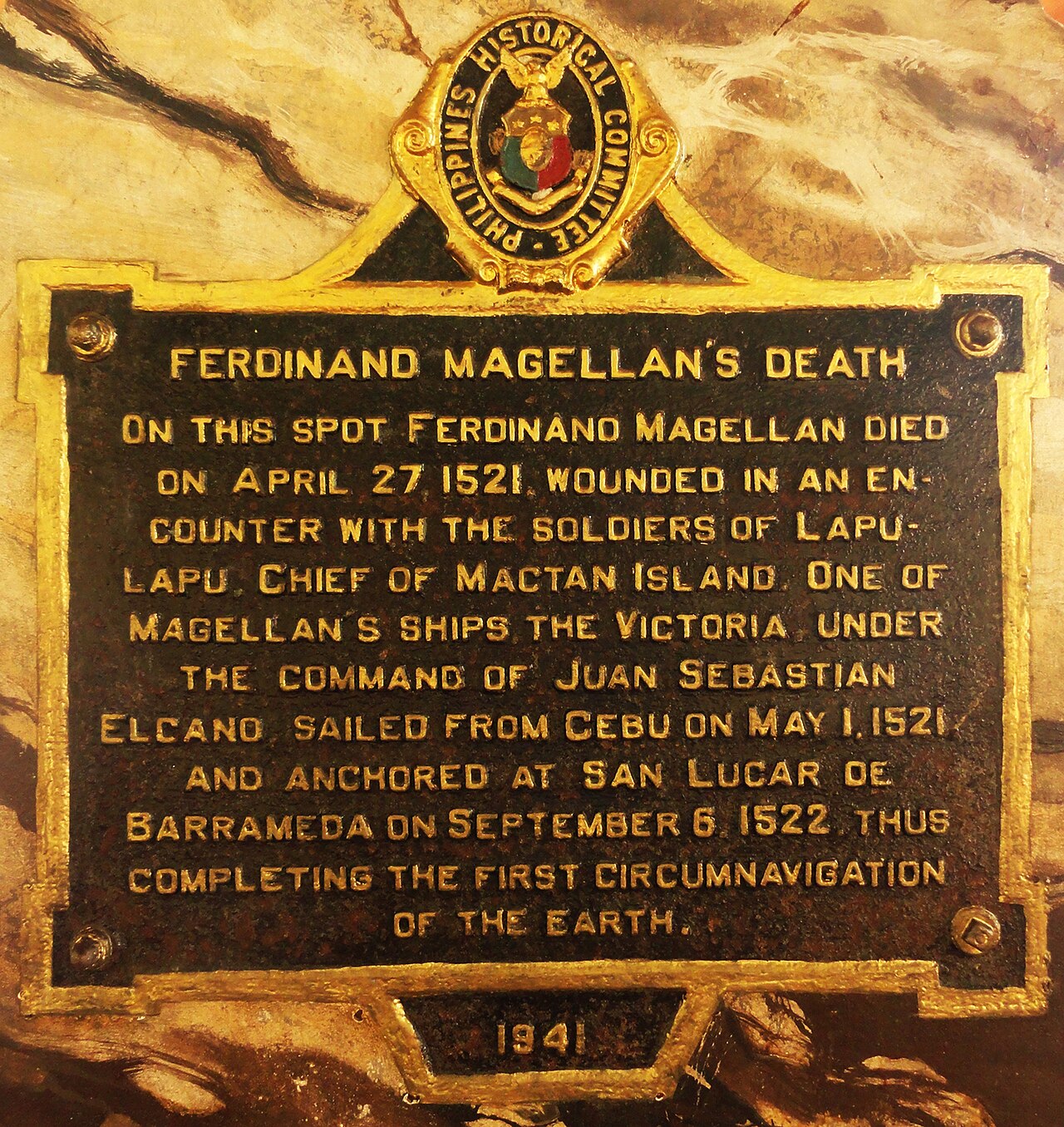
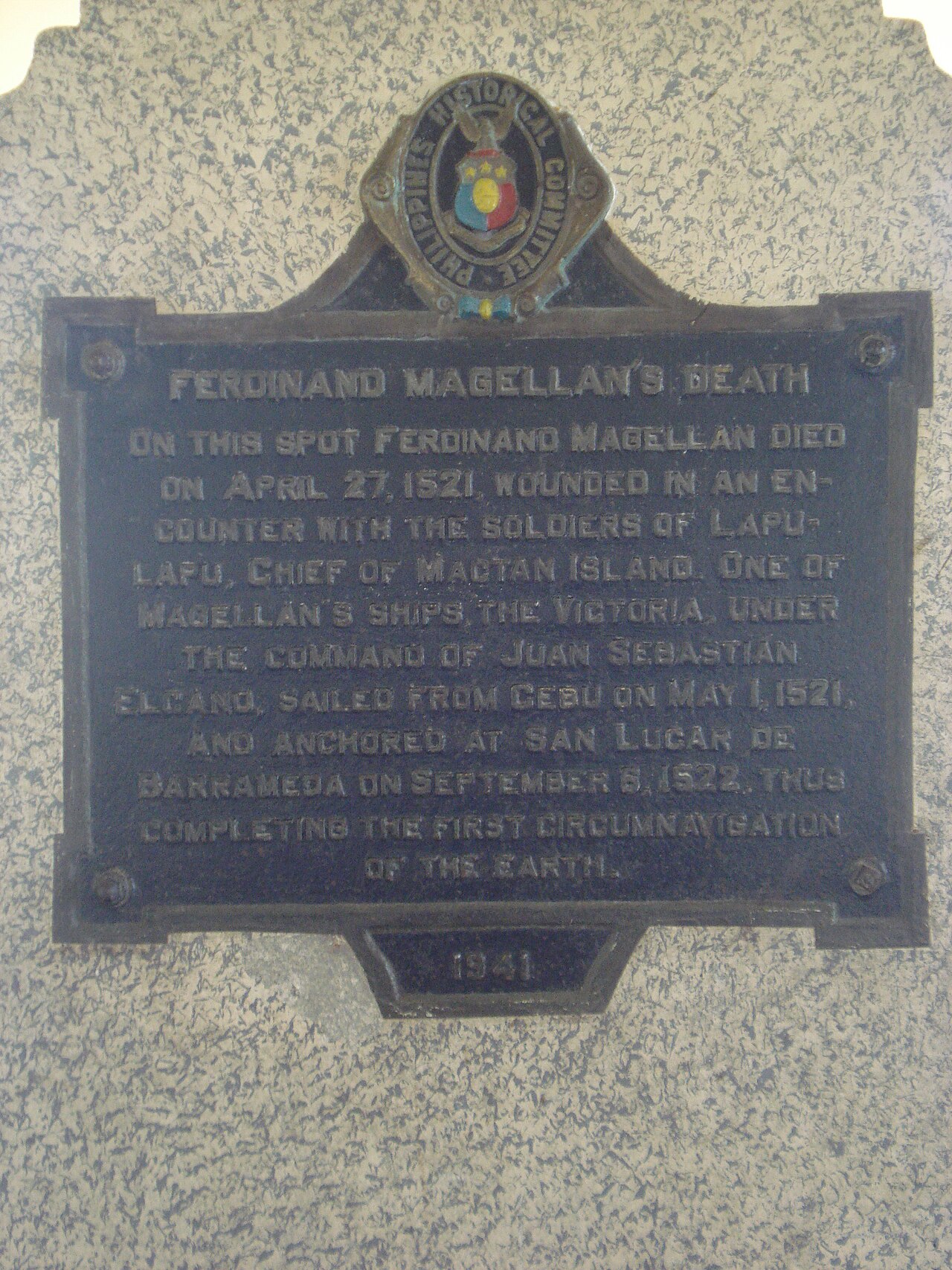
- Magellan was killed in the Battle of Mactan on 27 April 1521 after being shot in the neck with a poison arrow.
- Magellan's slave Enrique of Malacca was used as evidence to claim the Spice Islands fell within the Spanish sphere of influence.
- Magellan had already reached the Malay Archipelago traveling east while in Portuguese service, achieving a nearly complete personal circumnavigation.
- The expedition's crew consisted of about 270 men, including Spaniards, Portuguese, Italians, French, Greeks, Flemish, Germans, Irish, English, and one Malaysian.
- Magellan's two children, Rodrigo de Magallanes and Carlos de Magallanes, both died at a young age.
The Voyage and Its Brutal Toll
The five-ship fleet that departed Spain on 20 September 1519 carried about 270 men. After a series of storms and mutinies, the expedition successfully passed through the Strait of Magellan into the Mar del Sur, which Magellan renamed the Mar Pacifico, or Pacific Ocean. The expedition landed at Guam after an arduous crossing of the Pacific, then reached the Philippines. There, on 27 April 1521, Magellan died in the Battle of Mactan after being shot in the neck with a poison arrow. Under the command of Captain Juan Sebastián Elcano, the expedition finally reached the Spice Islands. The fleet's two remaining ships then parted ways, one attempting, unsuccessfully, to reach New Spain by sailing east across the Pacific. The other ship, commanded by Elcano, sailed west across the Indian Ocean and north along the Atlantic coast of Africa, finally returning to Spain in September 1522.
A Portuguese Sailor's Obsession with the Spice Islands
Magellan's drive to reach the Moluccas was rooted in personal experience. A Portuguese sailor who had served militarily in India, Malacca, and Morocco, he maintained a close bond with Francisco Serrão, his friend and possibly cousin. Serrão departed in the first expedition sent to find the "Spice Islands" in the Moluccas, where he remained. He married a woman from Amboina and became a military advisor to the Sultan of Ternate, Bayan Sirrullah. His letters to Magellan later proved decisive, giving information about the spice-producing territories. When King Manuel I of Portugal refused to support Magellan's plan to reach the Spice Islands by sailing westwards, Magellan proposed the same plan to King Charles I of Spain. Magellan claimed to Charles that his Malaccan or Sumatran slave Enrique had been a native of the Spice Islands and used Enrique and letters from Serrão to "prove" that the islands were so far east that they would fall within the Spanish sphere of influence.
The Political Deal That Made It Possible
Spain's urgent need for a western spice route was a direct consequence of the 1494 Treaty of Tordesillas, which locked the eastern passages around Africa into Portugal's hands. After having his proposed expeditions to the Spice Islands repeatedly rejected by King Manuel I of Portugal, Magellan proposed his project to Charles I, the young king of Spain (later emperor Charles V of the Holy Roman Empire) and became one of his subjects and navigators. Under the terms of the 1494 Treaty of Tordesillas, Portugal was to control the eastern routes to Asia that went around the Cape of Good Hope in Africa. Magellan instead proposed to seek a southwestern passage around South America to reach the Spice Islands by a western route. In 1518, for his allegiance to the Hispanic monarchy, Magellan was appointed an admiral of the Spanish fleet and given command of the expedition—the five-ship "Armada of Molucca". He also was made a Commander of the Order of Santiago, one of the highest military ranks of the Spanish Empire.
Redefining the Shape of the World
Before 1519, no European had ever sailed the full circumference of the globe or crossed the Pacific Ocean. The Magellan–Elcano expedition accomplished both, and in doing so it fundamentally altered how Europeans understood the planet's geography. The expedition demonstrated conclusively that a continuous western sea route around the world was navigable, a fact that reshaped cartographic thinking for generations. Yet the practical commercial payoff fell short of expectations: the route proved far longer and more punishing than planners had imagined, making it unsuitable for regular spice trade. Still, the voyage is widely regarded as one of the supreme achievements in the history of seamanship. It confirmed that the Americas constituted a separate continent rather than the edge of Asia, established the Pacific as a vast ocean in its own right, and proved that the Earth could be encircled entirely by sea—a truth that had never before been demonstrated by actual sailing.
Common Misconceptions (Editorial)
1. Some believe Magellan himself completed the first circumnavigation of Earth. In fact, he was killed in the Philippines in 1521, and it was his crew, commanded by Juan Sebastián Elcano, who finished the voyage. 2. It is often assumed Magellan was Spanish. He was actually Portuguese, though he led a Spanish expedition after King Manuel I of Portugal refused to support his plan. 3. A common misconception is that Magellan never reached Southeast Asia before his Spanish voyage. The facts show he had already traveled to the Malay Archipelago while serving Portugal from 1505 to 1512.
Why It Matters (Editorial)
Magellan’s expedition endures as a testament to human ambition and the drive to explore the unknown, even at the cost of one’s life. His journey fundamentally reshaped European understanding of the globe, proving that the Earth could be circumnavigated and bridging distant cultures through contact—however violent—with the Philippines. The story also highlights how individual perseverance can overcome political rejection, as Magellan’s rejected plan eventually led to one of history’s greatest maritime achievements.
Notable Quotes (Wikiquote)
"Alex Jones, The "Justin Bieber" Rant (February 21, 2011)." — Ferdinand Magellan "Antonio Pigafetta's account of Magellan's death at the w:Battle of Mactan, w:Philippines." — Ferdinand Magellan
Gallery




Frequently Asked Questions
Who is Ferdinand Magellan?
Ferdinand Magellan (c. 1480 – 27 April 1521) was a Portuguese-born explorer who planned and commanded a Spanish expedition to the East Indies between 1519 and 1522. He is best remembered as the driving force behind the first circumnavigation of Earth.
What are Ferdinand Magellan's greatest achievements?
He was the first European to sail through the strait now bearing his name, the first to cross the Pacific Ocean from east to west, and the first known European to make contact with the Philippine islands. His voyage also set in motion the first full circumnavigation of the globe.
How does Ferdinand Magellan's story end?
Magellan was killed in battle in the Philippines on 27 April 1521, well before the fleet could return to Spain. Despite his death, the surviving crew pressed on and completed the first circumnavigation of Earth in 1522.
Did Ferdinand Magellan personally complete the circumnavigation?
No; he died in the Philippines in 1521 and never saw the journey through. It was his remaining crew who finished the voyage and brought the ships home, yet he is still credited with planning and leading the expedition that accomplished the feat.
Why is Ferdinand Magellan important to exploration history?
His 1519–1522 expedition demonstrated that the Pacific could be crossed and that the East Indies were reachable by sailing westward, fundamentally reshaping European understanding of world geography. The strait and the Pacific crossing he pioneered remain landmark milestones of the age of exploration.
More in Great Explorers 1-22
Spotted an error? Know more?
This is a living reference — every entry is fact-audited, and reader corrections feed straight into our audit queue. Suggest an edit · See this site's audit record