
Marco Polo
Venetian merchant whose travels opened the East to European understanding.

Marco Polo · Public domain
Marco Polo (c. 1254 – 8 January 1324) was a Venetian merchant, explorer, and writer who travelled through Asia along the Silk Road between 1271 and 1295. His travels are recorded in *The Travels of Marco Polo* (also known as *Book of the Marvels of the World* and *Il Milione*, c. 1300), a book that described the then-mysterious culture and inner workings of the Eastern world, including the wealth and great size of the Mongol Empire and China under the Yuan dynasty, giving Europeans their first comprehensive look into China, Persia, India, Japan, and other Asian societies.
- born
- c. 1254, Venice (exact date and place archivally unknown)
- died
- 8 January 1324, Venice
- field
- Merchant, explorer, writer
- nationality
- Venetian
- known_for
- Travels through Asia along the Silk Road; detailed chronicle of the East; first
Lore & Background
Marco Polo was born around 1254 in Venice, but the exact date and place of birth are archivally unknown. His father, Niccolò Polo, and uncle, Maffeo, were travelling merchants who journeyed to Asia and met Kublai Khan before Marco's birth. Marco's mother died during his childhood, and he was raised by an aunt and uncle. He received a good education in mercantile subjects including foreign currency, appraising, and the handling of cargo ships, but learned little or no Latin. In 1269, Niccolò and Maffeo returned to Venice and met Marco for the first time when he was fifteen. In 1271, at seventeen years of age, Marco, his father, and his uncle set off for Asia. They sailed to Acre and later rode on their camels to the Persian port Hormuz. During the trip, they received news that the Conclave had elected a new Pope, who was the archdeacon of Acre. The three hurried to the Holy Land, where the new Pope entrusted them with letters for the 'Great Khan' and sent with them two Dominican fathers as his legates. They continued overland until they arrived at Kublai Khan's palace in Shangdu, China, then known as Cathay. Impressed by Marco's intelligence and humility, Kublai appointed him to serve as his foreign emissary to India and Myanmar. He was sent on many diplomatic missions throughout the empire and in Southeast Asia, such as in present-day Indonesia, Sri Lanka and Vietnam. As part of this appointment, Marco travelled extensively inside China, living in the emperor's lands for 17 years.
Reader's Guide
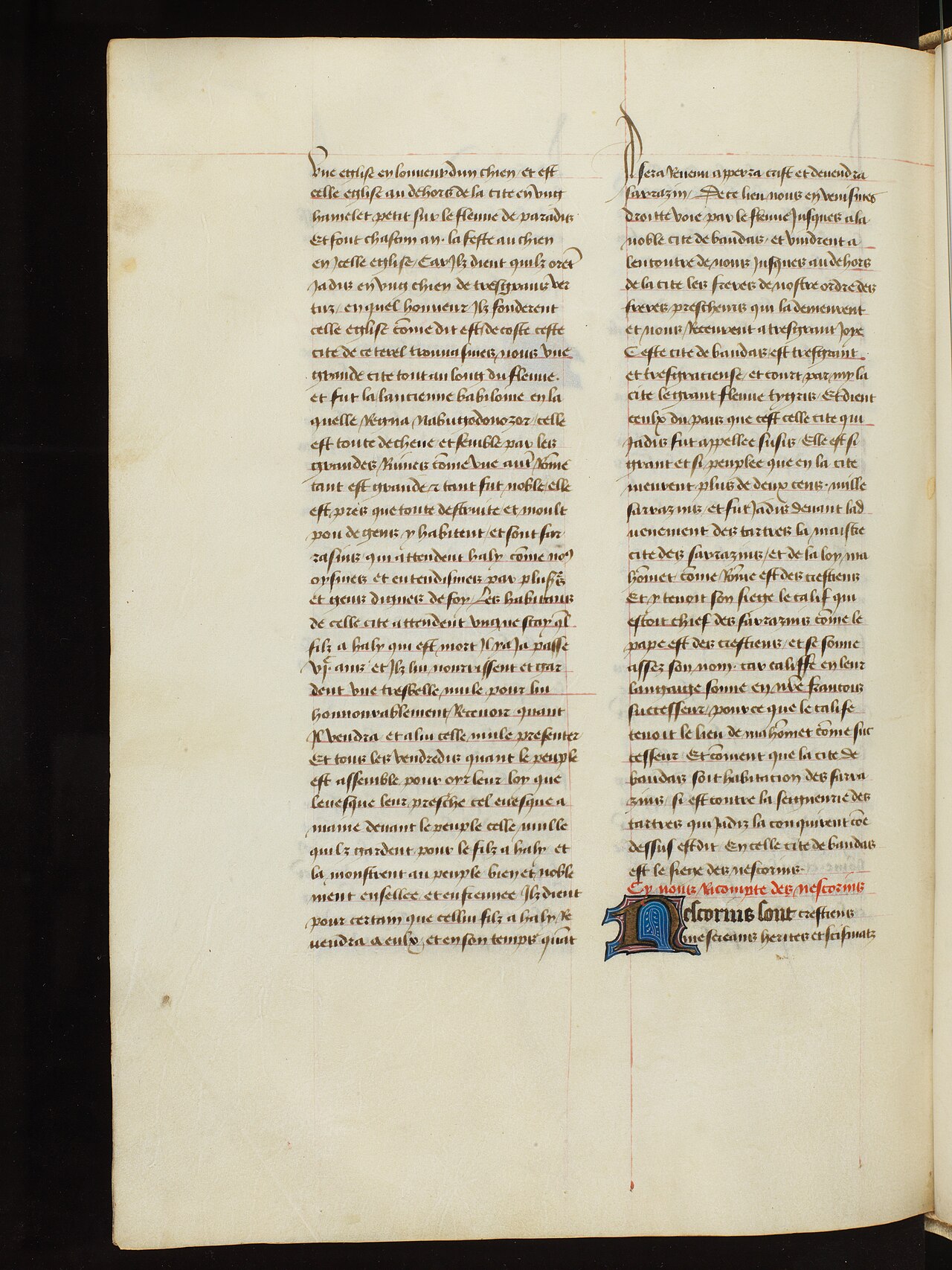
Marco Polo's significance lies in his detailed chronicle of his travels, which provided Europeans with the first comprehensive look into the inner workings of the Far East, including China, India, and Japan. Though he was not the first European to reach China, he was the first to leave a detailed chronicle of his experience. His account included the first Western record of porcelain, gunpowder, paper money, and some Asian plants and exotic animals. The narrative inspired Christopher Columbus and many other travellers. There is substantial literature based on Polo's writings; he also influenced European cartography, leading to the introduction of the Catalan Atlas and the Fra Mauro map. The book soon spread throughout Europe in manuscript form, and became known as *The Travels of Marco Polo*. It depicts the Polos' journeys throughout Asia, giving Europeans their first comprehensive look into the inner workings of the Far East, including China, India, and Japan.
Did You Know?
- Marco Polo was nicknamed 'Milione' during his lifetime, which in Italian literally means 'Million'.
- He was probably captured by Genoese in a skirmish in 1296 off the Anatolian coast between Adana and the Gulf of Alexandretta, not during the Battle of Curzola as later tradition claimed.
- The Polos accompanied the Mongol princess Kököchin to Persia around 1291; when they arrived, Arghun Khan had died, and Kököchin eventually became the wife of his son Ghazan.
- Marco Polo learned little or no Latin, despite receiving a good education in mercantile subjects.
- In 2022, it was found that Polo first had a daughter named Agnese (b. 1295/1299 – d. 1319) from a partnership or marriage which ended before 1300.
The Road to Cathay and a Place at the Khan's Court
In 1271, seventeen-year-old Marco Polo departed Venice alongside his father Niccolò and his uncle Maffeo, embarking on what would become a twenty-four-year odyssey through Asia. The trio sailed to Acre, then continued overland on camels toward the Persian port of Hormuz, following the ancient Silk Road. Along the way they received news that the Conclave had elected a new Pope, who was exactly the archdeacon of Acre. The three hurried to the Holy Land, where the new Pope entrusted them with letters for the 'Great Khan' and sent with them two Dominican fathers, Guglielmo of Tripoli and Nicola of Piacenza, as his legates. Their ultimate destination was Cathay, where the royal court of Kublai Khan received them. The Mongol emperor, founder of the Yuan dynasty, was impressed by Marco's intelligence and humility. Rather than treating Marco as a mere curiosity, Kublai appointed him as a foreign emissary to India and Myanmar, dispatching him on diplomatic missions across the empire and into Southeast Asia—present-day Indonesia, Sri Lanka and Vietnam. Over seventeen years of residence in the emperor's lands, Marco witnessed customs, technologies, and landscapes entirely unknown to the European world, building a reservoir of firsthand knowledge that would later shape how the West understood the East.
A Prisoner's Legacy: Dictating the Book of Marvels
Marco Polo's return to Venice in 1295 coincided with a bitter conflict between his city and Genoa. He armed a galley equipped with a trebuchet to join the war effort on behalf of Venice. He was probably caught by Genoese in a skirmish in 1296, off the Anatolian coast between Adana and the Gulf of Alexandretta. It was in that confined, uncertain space that the most consequential act of his adult life took shape. Sitting beside his fellow prisoner Rustichello da Pisa, a writer, Marco dictated the full account of his twenty-four years abroad. The resulting manuscript—known as *The Travels of Marco Polo*, or *Il Milione*, or the *Book of the Marvels of the World*—was composed around 1300 and became the first detailed European chronicle of life in the East. Released from captivity in August 1299, Marco resumed his mercantile career and built considerable wealth. Sometime before 1300, his father Niccolò died. In 1300, he married Donata Badoèr, the daughter of Vitale Badoèr, a merchant. They had three daughters: Fantina, Bellela, and Moreta. He died on 8 January 1324 and was buried in the church of San Lorenzo in Venice. Though his later life was comparatively quiet, the book he had dictated from a prison cell ensured that his name would outlive every merchant's ledger he ever kept.
Shaping the Western Map of the World
Although other Europeans had reached China before him, Marco Polo holds a singular place in history as the first to produce a comprehensive, first-person chronicle of the Eastern world. His narrative offered medieval readers a vivid portrait of the geography, ethnic customs, and daily life of societies spanning China, Persia, India, and Japan. Crucially, the text contains the earliest Western records of porcelain, gunpowder, paper money, and a range of Asian plants and exotic animals—details that had no prior European documentation. The book's influence radiated far beyond the reading room. Christopher Columbus and a host of subsequent explorers drew directly on Polo's descriptions when planning their own voyages. European cartographers, in turn, wove his geographic observations into their work, a process visible in landmark productions such as the Catalan Atlas and the Fra Mauro map. A substantial body of literature has grown around his writings over the centuries, cementing his account not merely as a travelogue but as a foundational document that reoriented how the Western world conceptualized the scale, wealth, and sophistication of the East.
The Polo Family and the Man Behind the Name
Marco Polo was born in Venice around 1254, though the precise date and location remain undocumented in surviving archives. His father, Niccolò Polo, was a prosperous merchant who traded with the Near East and had achieved considerable prestige in the city. Marco's mother died during his childhood, and he was raised by an aunt and uncle. He received a good education in mercantile subjects including foreign currency, appraising, and the handling of cargo ships, but learned little or no Latin. His father later married Floradise Polo (née Trevisan). The family's nickname, Milione—literally 'Million'—has generated scholarly debate. The fifteenth-century humanist Giovanni Battista Ramusio claimed the citizens of Venice bestowed it on Marco after his return because he habitually described Kublai Khan's wealth in millions. Yet because Niccolò also carried the same nickname, the nineteenth-century philologist Luigi Foscolo Benedetto argued that Milione was actually a contraction of Emilione, serving to distinguish Niccolò's and Marco's branch from other Polo families. Alternative theories placing Marco's birth on the island of Korčula or in Constantinople have not gained acceptance among most scholars and have been countered by other studies.
Common Misconceptions (Editorial)
1. A common misconception is that Marco Polo was captured during the Battle of Curzola. In fact, he was probably captured in a skirmish off the Anatolian coast in 1296, not at Curzola. 2. Some believe Marco Polo was highly educated in classical subjects, including Latin. However, the facts state he learned little or no Latin, despite a good mercantile education. 3. It is often assumed that Marco Polo’s first child was born after his return to Venice. In reality, records from 2022 show he had a daughter named Agnese, born between 1295 and 1299 from a partnership that ended before 1300.
Why It Matters (Editorial)
Marco Polo endures because his *Travels* gave medieval Europe its first detailed, firsthand look at the cultures, wealth, and governance of Asia, shattering centuries of ignorance. His account remains a cornerstone of cross-cultural exchange, showing how one person’s observations can reshape an entire civilization’s worldview.
Notable Quotes (Wikiquote)
"Non ho scritto neppure la metà delle cose che ho visto." — Marco Polo "Io parlo parlo ... ma chi m'ascolta ritiene solo le parole che aspetta. ... Chi comanda al racconto non è la voce: è l'orecchio." — Marco Polo "I speak and speak, ... but the listener retains only the words he is expecting. ... It is not the voice that commands the story: it is the ear." — Marco Polo "Jacques Le Goff, quoted in John M. Hobson. The Eastern Origins of Western Civilisation. New York: Bridge University Press, 2004." — Marco Polo
Gallery
Frequently Asked Questions
Who is Marco Polo?
Marco Polo was a Venetian merchant and explorer born around 1254 in Venice. He is best known for his roughly 24-year journey through Asia along the Silk Road, spanning approximately 1271 to 1295.
What is Marco Polo's role or field?
He worked as a merchant, explorer, and writer. His lasting contribution was producing a detailed written chronicle of the Eastern world for a European readership.
How does Marco Polo's story end?
Marco Polo died in Venice on 8 January 1324. He spent his final years back in his home city after completing his long travels through Asia.
Why is Marco Polo important?
His written account gave Europeans their first broad, detailed picture of China, Persia, India, and the vast Mongol Empire under the Yuan dynasty. It also introduced Western readers to innovations such as porcelain, gunpowder, and paper money.
What is Marco Polo most known for?
He is celebrated for his Silk Road travels and for authoring The Travels of Marco Polo. That work stands as the first comprehensive Western record of several Asian technologies, plants, and exotic animals.
More in Great Explorers 1-22
Spotted an error? Know more?
This is a living reference — every entry is fact-audited, and reader corrections feed straight into our audit queue. Suggest an edit · See this site's audit record